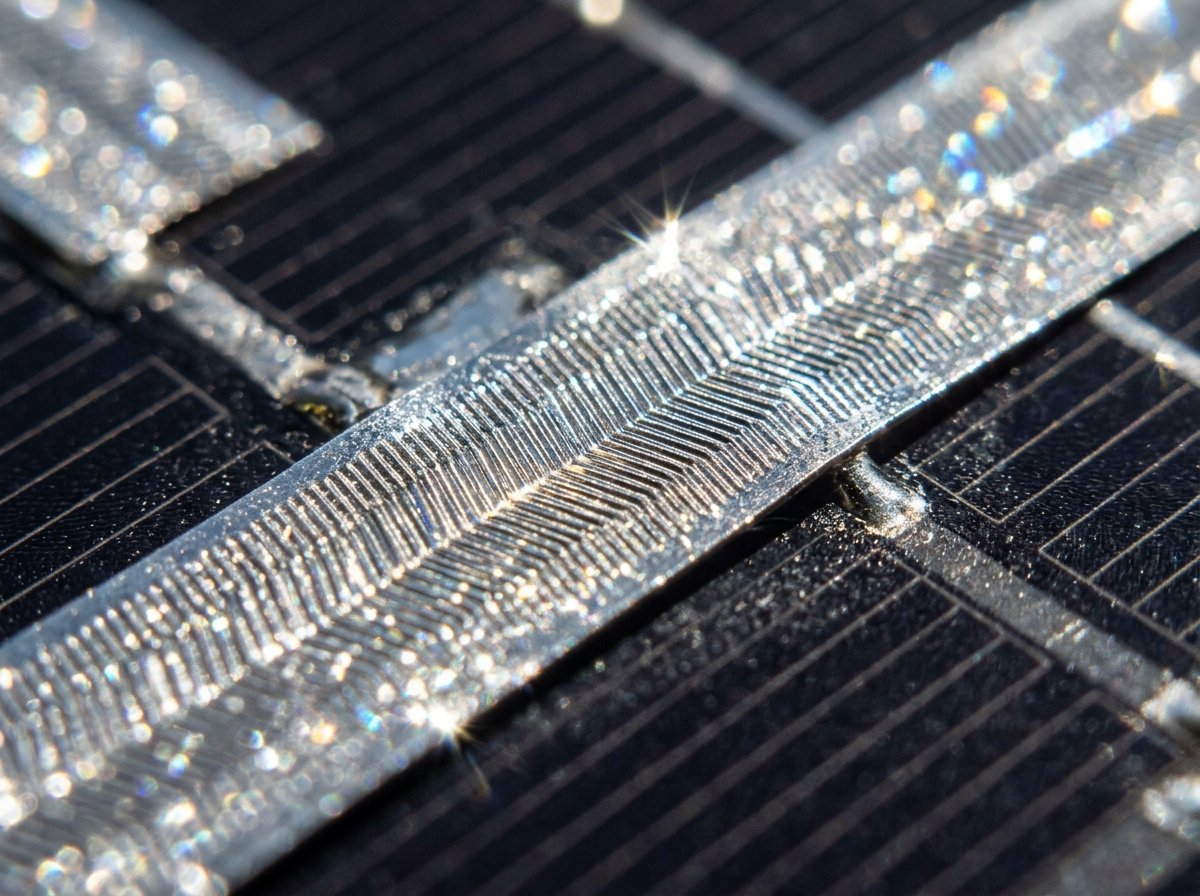
Standard flat busbars bounce sunlight straight out into the sky. Sumati’s Reflective PV Busbar features 120° triangular micro-prisms that redirect reflected photons back onto module cover glass, harvesting extra current for a +1.2% to +1.8% power gain.
| Power Gain | +1.2% to +1.8% Wattage Increase |
| Prism Geometry | 120° Triangular Optical Micro-Groove |
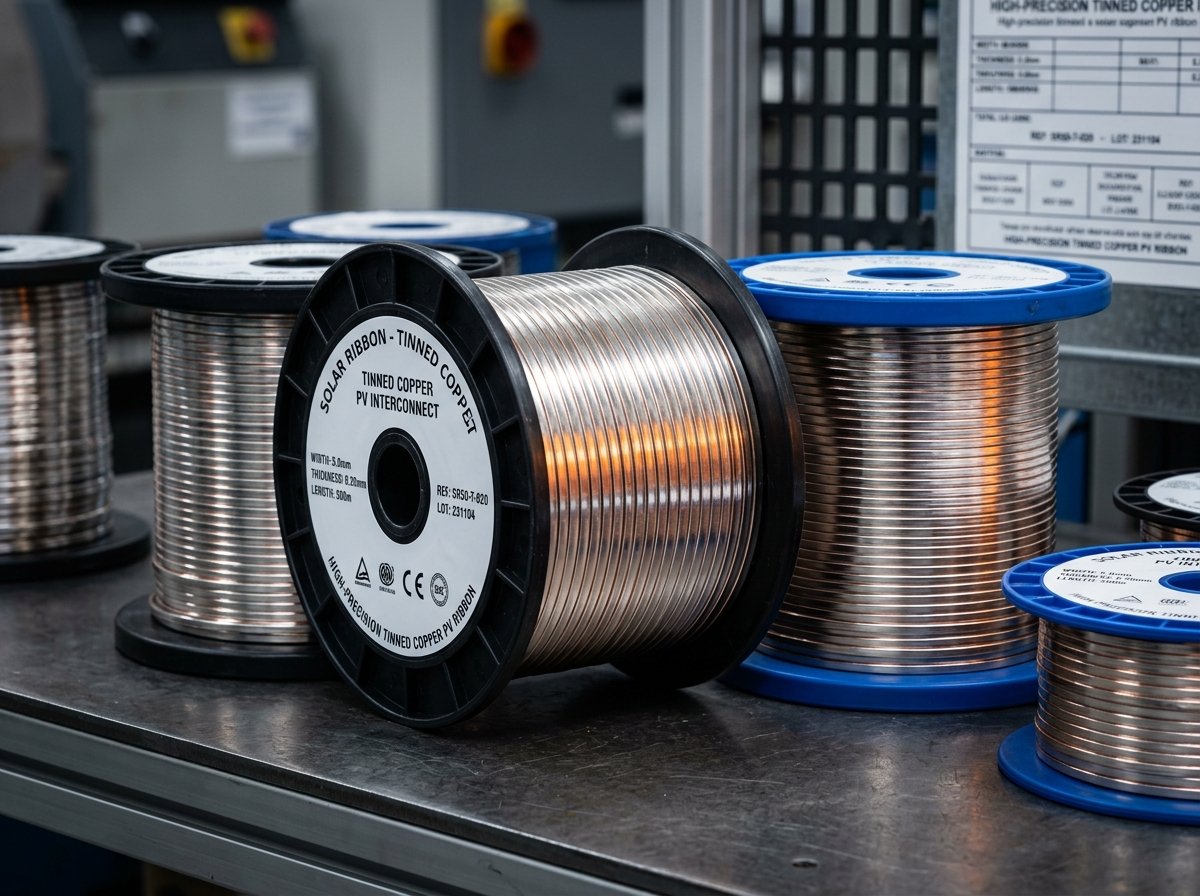
| Width Range | 1.20 mm – 3.00 mm |
| Thickness Range | 0.15 mm – 0.30 mm |
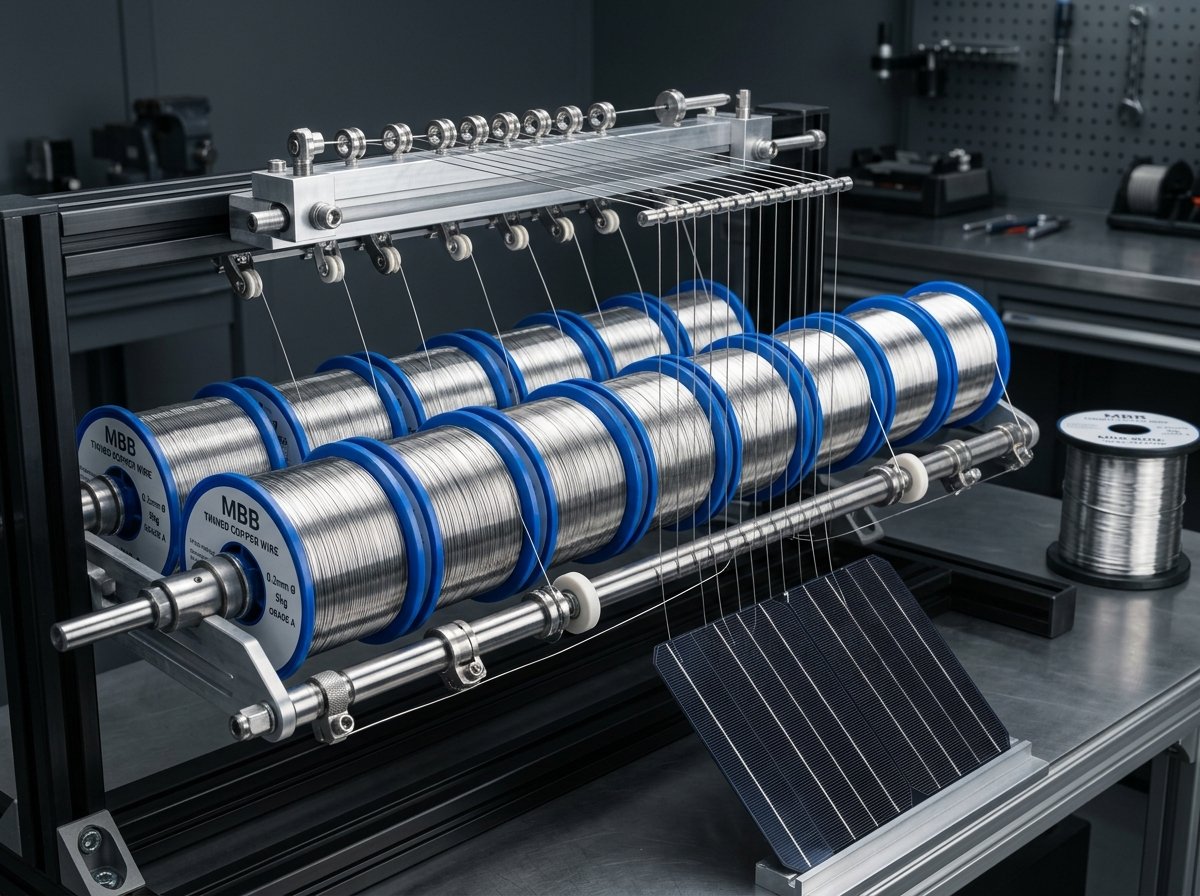
| Compatibility | Standard Automated Stringing Equipment |
Prismatic light redirection converting busbar shading loss into active module power output gain.
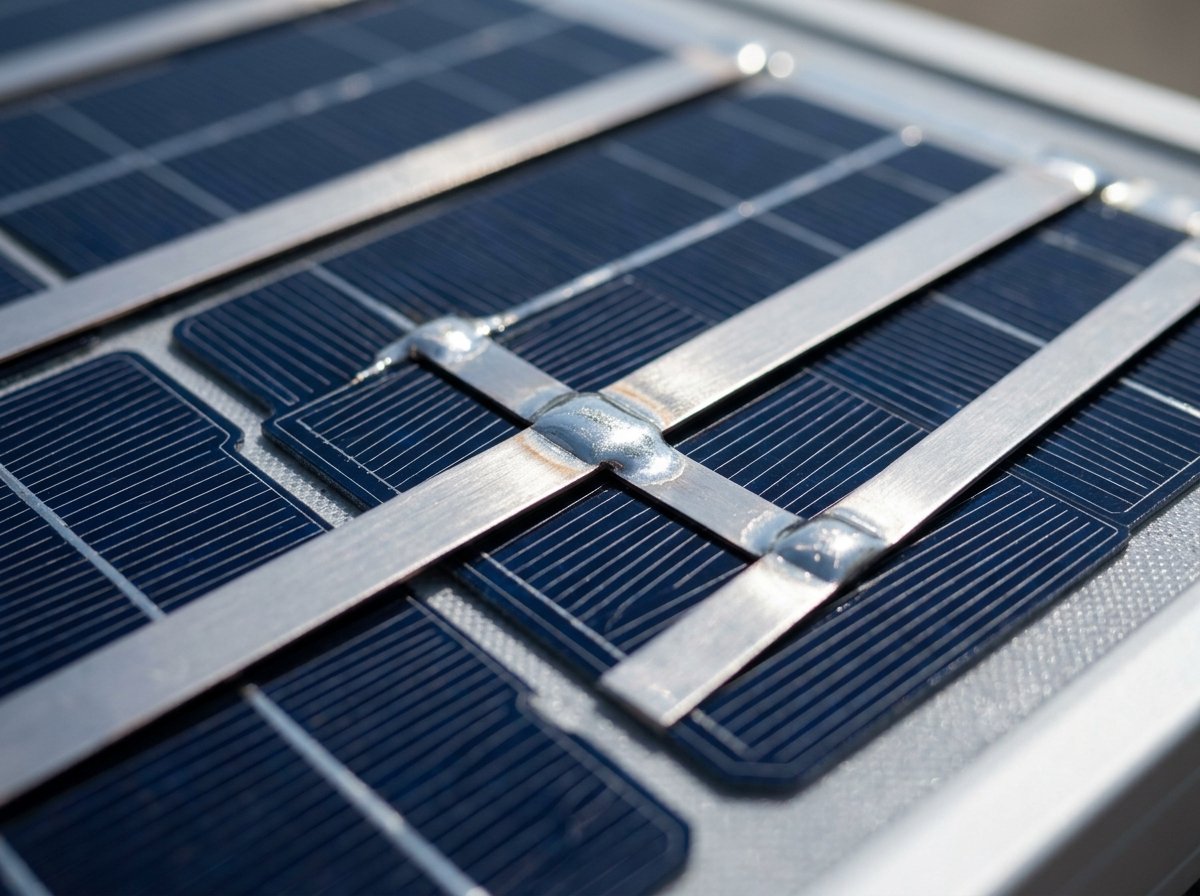
Sumati Reflective Photovoltaic Busbar is engineered to eliminate the single largest optical limitation of traditional crystalline solar modules: metallic busbar shading loss. On conventional smooth flat ribbons, incident sunlight striking the copper conductor is reflected directly backward at 90°, exiting straight out through the front glass cover and resulting in permanently lost energy potential.
Our reflective busbar features precision-embossed triangular micro-grooves with an exact 120° vertex angle. When direct or diffuse sunlight strikes these engineered facets, photons are redirected sideways at an oblique angle ($\approx 60^\circ$ relative to the module surface normal). Because this angle exceeds the critical angle of the glass-air boundary ($\theta_c \approx 41.8^\circ$), Total Internal Reflection (TIR) is triggered at the front cover glass.
Instead of escaping the module, over 80% of redirected photons are bounced downward onto the adjacent active silicon emitter layer, converting previously unharvested busbar surface area into active electrical generation. Third-party flash testing and field electroluminescence imaging confirm an immediate +1.2% to +1.8% overall module peak wattage gain (+6W to +9W on 550W+ bifacial modules).
Despite its structured optical surface, the reverse side of the busbar maintains flat planar geometry for zero thermal resistance contact with solar cell metallization fingers, ensuring 100% drop-in compatibility with standard automated stringers without altering spooling tension or machine tooling.